
How Tim Farley added 3 new clients ($15M in AUM) from a single campaign
By Jack Vaughan
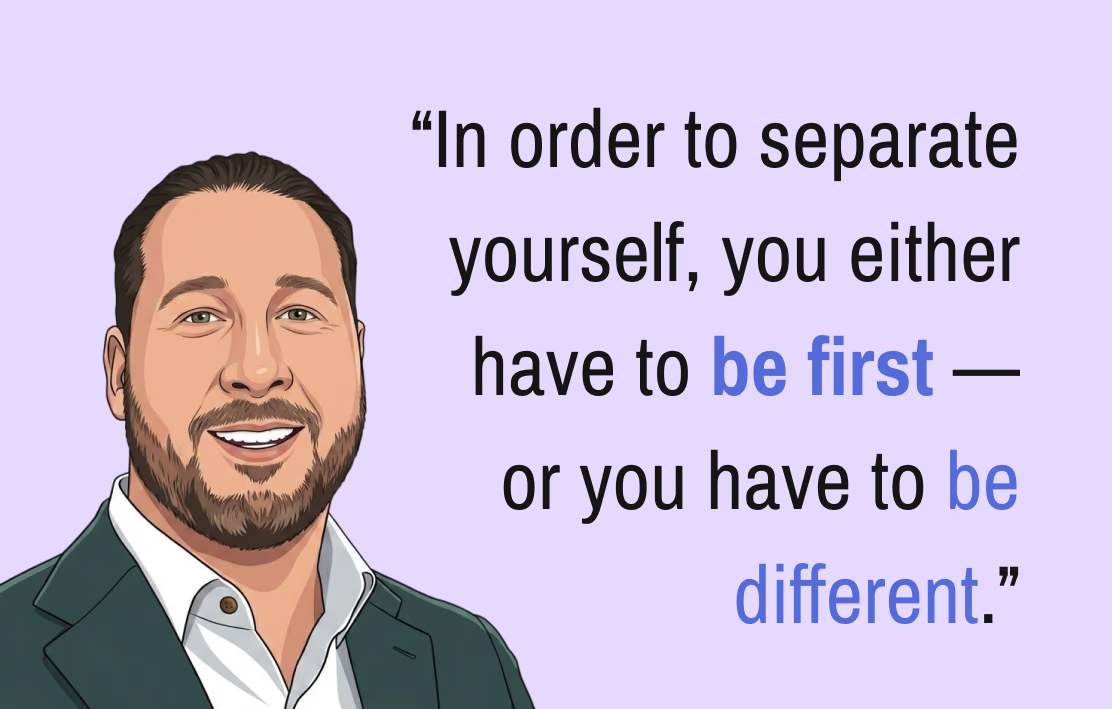

”In order to separate yourself, you either have to be first — or you have to be different.”
For years, growth at Tempo Wealth looked like most successful RIAs:
Referrals, reputation, relationships.
Nearly 99% of new clients came through word of mouth inside a tight network of public company executives.
And for a long time, that worked. But as the firm began thinking about scaling further, the team asked a bigger question:
How do we grow without losing the specificity that made us successful in the first place?
What followed became one of the most successful FINNY campaigns to date:
- 6 inbound meeting requests
- 3 new clients signed
- 3 additional prospects in late-stage conversations
- $12–15M+ in AUM added
- Including a senior officer at a public company
The Foundation: “Be First or Be Different”
Tempo Wealth didn’t stumble into a niche — they built it deliberately.
As Tim Farley explains:
“In order to separate yourself, you either have to be first — or you have to be different. We were never going to be first, so the question became: how are we different?” Their answer wasn’t broader marketing. It was deeper specialization.
The firm focuses on executives at public companies — individuals who are highly sophisticated professionally but often fragmented in their personal financial planning.
Instead of selling products, they built a family-office-style planning model that coordinates investments, tax strategy, estate planning, and equity compensation into one integrated process.
That clarity shaped everything about their FINNY strategy.
The Shift: From Referral-Only to Intentional Expansion
Before FINNY, the firm had never run structured outbound campaigns.
Growth came from:
- Internal company referrals
- Promotions and leadership changes within organizations
- Reputation-driven introductions
So when they evaluated FINNY, the goal wasn’t to “start marketing.”
It was to expand within ecosystems where they already had credibility.
Rather than chasing a general audience, they focused on:
- Companies where they already worked with executives
- Known pain points tied to equity compensation and leadership transitions
- Messaging aligned with the exact concerns those executives face
This wasn’t cold outreach. It was contextual expansion.
The Strategy That Made the Campaign Different
Most advisors open a sequence by asking for a meeting.
Tempo Wealth did the opposite.
Their outreach focused first on education — helping prospects recognize problems before ever suggesting a call.
As Tim put it during the conversation:
“People want to buy. They don’t want to be sold.”
So instead of pushing a discovery call early, the campaign:
- Led with content addressing top executive concerns
- Focused on clarity and insight, not conversion
- Positioned the firm as a resource, not a pitch
Only later in the sequence did they introduce the idea of an introductory conversation — and even then, framed it as optional and informational.
That shift changed the tone entirely. Prospects didn’t feel targeted, but rather understood.
The Playbook: Tactics That Actually Drove Results
1. Start Where You Already Have Credibility
Rather than building new audiences from scratch, the advisor focused on companies where Tempo Wealth already had relationships.
This allowed outreach to feel familiar, not random, and dramatically increased trust.
2. Permission-Based Social Proof
Instead of generic testimonials, the advisor asked existing clients for permission to reference them within the same organization.
That subtle validation made outreach feel grounded in reality — not marketing.
3. Behavioral Personalization
When prospects engaged with content or downloaded resources, the advisor followed up with:
- Personalized email
- Tailored outreach messaging
The outreach referenced what the prospect had already shown interest in, making timing feel natural.
4. Patience Over Pressure
Early performance wasn’t perfect.
Instead of abandoning the campaign, the advisor refined messaging and adjusted positioning.
That willingness to iterate, rather than expect immediate results, allowed momentum to compound.
5. Redefining Success Metrics
The goal wasn’t immediate client conversion.
It was leaving every interaction with a positive impression.
Tim emphasized that the objective was:
Not immediate gratification, but creating an experience where prospects felt respected, informed, and confident.
Ironically, that mindset is what drove conversions.
The Results
From a single FINNY campaign:
- 6 inbound meeting requests
- 3 new clients onboarded
- 3 additional opportunities progressing
- $12M–15M+ in AUM added
- One new relationship includes a public company officer
For a firm that historically relied on referrals, this wasn’t just a win. It was proof that outbound, when done with precision and authenticity can feel as natural as an introduction.
The Bigger Takeaway
Tempo Wealth didn’t succeed because they sent more messages. They succeeded because they embraced a different philosophy:
✔ Specific > broad
✔ Educational > promotional
✔ Timing > volume
✔ Trust > urgency
Their campaign shows what happens when outbound stops trying to force decisions — and instead creates clarity for the right people at the right moment.
Growth doesn’t come from selling harder. It comes from being different, targeted, and genuinely helpful.